Wax Heater Capacity Guide: 150ML, 400ML, 500ML, 2000ML and Larger
Capacity helps only when it is tied to the correct product format. WAXLUXE catalog models range from 150ML roll-on heaters to 4000ML paraffin baths, so buyers should select by workflow first and capacity second.
What capacities appear in the supplied catalog
| Model | Capacity | Power | Voltage/Frequency | Category |
|---|---|---|---|---|
| SM-61 | 150ML | 100W | 220V/50Hz – 110V/60Hz | Roll-On Wax Heaters |
| YSM-6001A | 400ML | 100W | 220V/50Hz – 110V/60Hz | Digital Wax Heaters |
| SM-500B | 500ML | 100W | 220V/50Hz – 110V/60Hz | Single Pot Wax Heaters |
| YSM-5003A | 600ML | 100W | 220V/50Hz – 110V/60Hz | Single Pot Wax Heaters |
| SM-187 | 2000ML | 100W | 220V/50Hz – 110V/60Hz | Professional Wax Stations |
| SM-55 | 2500ML | 200W | 220V/50Hz – 110V/60Hz | Paraffin Wax Baths |
| SM-52 | 3000ML | 200W | 220V/50Hz – 110V/60Hz | Paraffin Wax Baths |
| SM-508 | 4000ML | 200W | 220V/50Hz – 110V/60Hz | Paraffin Wax Baths |
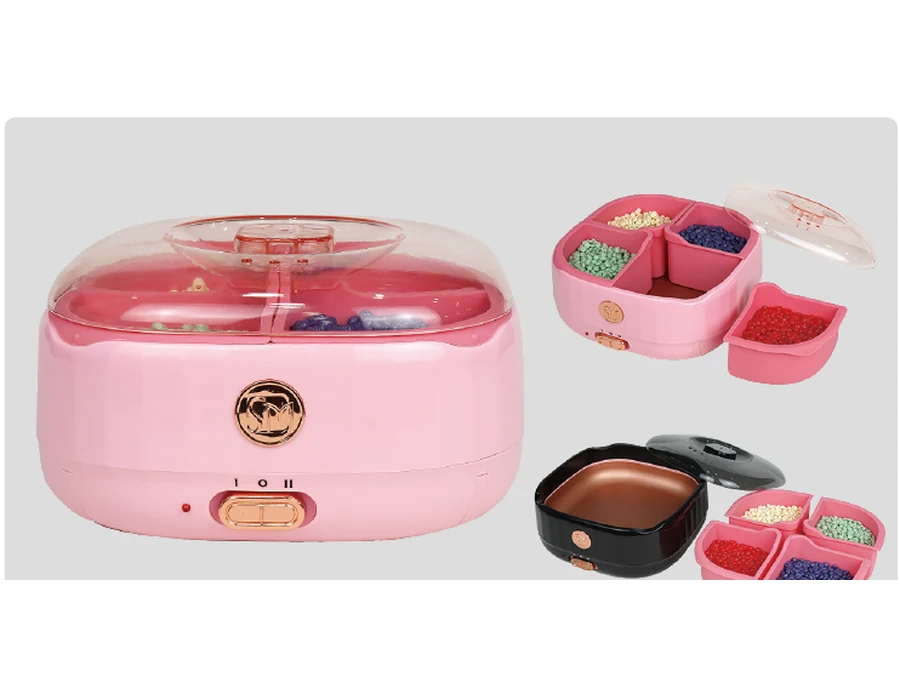
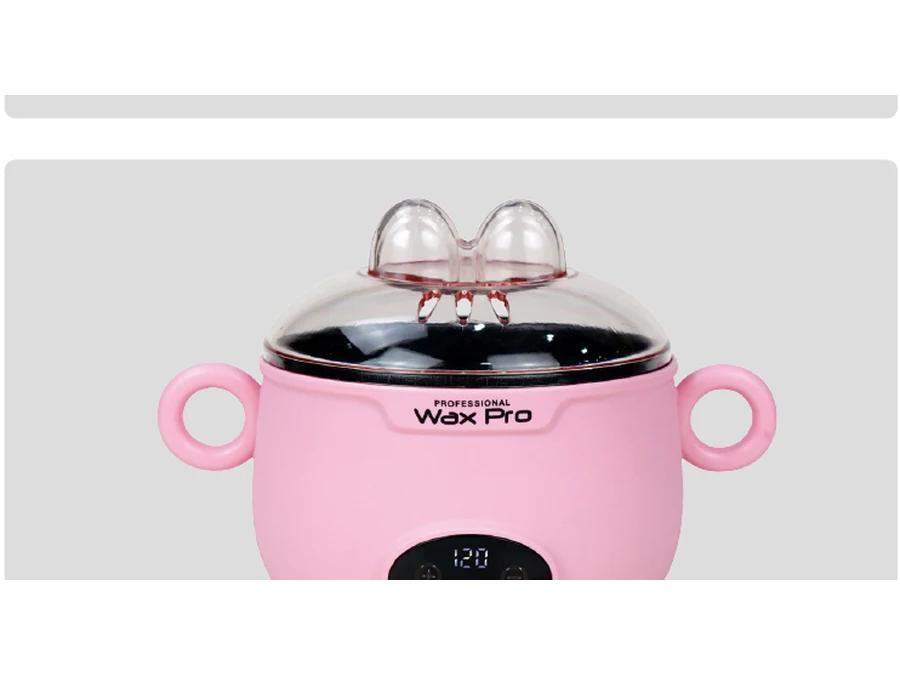
The WAXLUXE catalog spans several capacity bands and product formats: 150ML roll-on units, 400ML digital/compact heaters, 500ML and 600ML single-pot heaters, a 2000ML professional station, and 2500ML–4000ML paraffin baths. These numbers should not be compared as though all products perform the same job.
150ML–400ML: compact and cartridge-oriented formats
At the smaller end, catalog models include 150ML roll-on heaters and multiple 400ML pot heaters. These products can support compact assortments and kits. Buyers should evaluate packaging size, end-user handling and whether the model is a cartridge heater or an open pot, because the same nominal capacity can represent different workflows.
For private label, smaller products can make a visually coherent starter range when combined with accessories. However, the final kit should be built around verified compatibility rather than assuming every wax or cartridge fits every device.
500ML–600ML: core single-pot range
The catalog includes several 500ML and 600ML single-pot models. This band can serve as the core of a general wax-heater assortment because it offers multiple housing and control designs while keeping the product format easy to understand.
When comparing similar capacities, use dimensions, power, control style and carton data to reduce the shortlist. Then verify pot fit, lid, controls, heating behavior and packaging on the sample. For a branded range, select visually distinct models rather than listing many near-duplicates.
2000ML and above: professional stations and paraffin baths
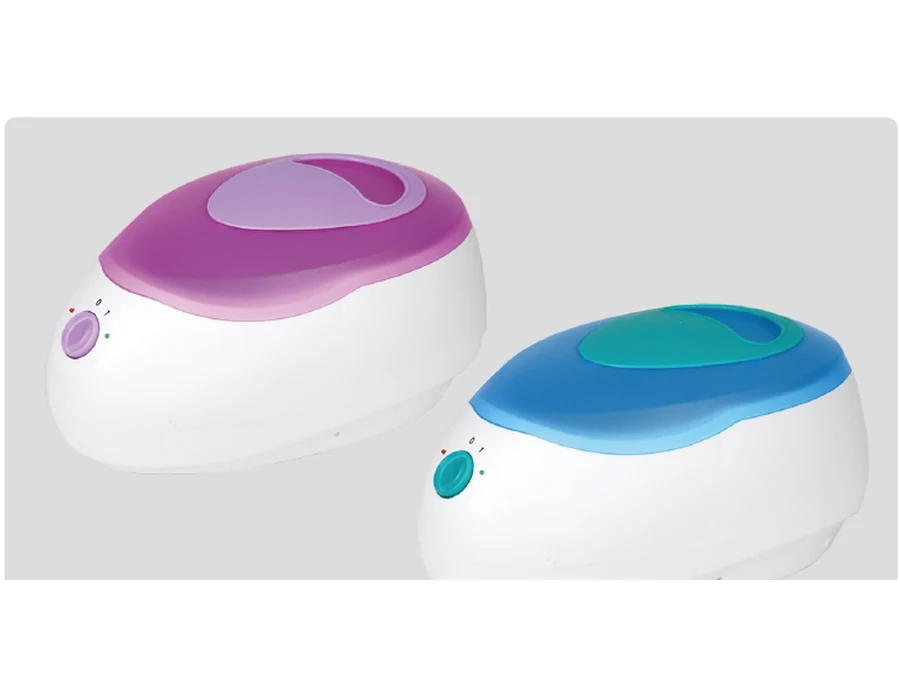
Large capacities represent a different product proposition. SM-187 is listed at 2000ML in the professional station category. SM-55, SM-52 and SM-508 are paraffin baths listed at 2500ML, 3000ML and 4000ML respectively. These products typically require more countertop or treatment space and a different packaging plan than compact heaters.
For paraffin baths, the buyer should verify usable internal dimensions and treatment workflow, not only liters or milliliters. For professional stations, verify pot arrangement and controls. Do not market a large-capacity product as “faster” or “more powerful” unless testing supports that claim.
Capacity affects shipping and merchandising
Higher capacity often means a larger housing, but use actual catalog dimensions and carton measurements rather than assumptions. Carton quantity also affects freight planning and warehouse handling. If custom retail packaging is added, recalculate the final master carton instead of reusing catalog carton data unchanged.
For e-commerce, dimensional weight can matter as much as unit weight. For distributors, mixed-model ordering can create a stronger assortment but also requires clear carton labeling and packing lists.
How to choose the right capacity
Ask three questions: what is being heated, how often will the end user use it, and how much countertop or storage space is acceptable? Then decide whether the product should be compact, core single-pot, professional multi-pot or paraffin-care. Capacity becomes meaningful only after the product format is correct.
Finally, verify the exact capacity claim on the approved sample if it will appear prominently on packaging or marketplace listings. Catalog data is a sourcing starting point; the approved production specification is the final marketing reference.
Buyer FAQ
Is 500ML enough for professional use?
It can fit many general wax-heater workflows, but professional requirements vary. Choose by actual use case and service volume, not capacity alone.
Is a 4000ML paraffin bath the same type of product as a 500ML wax heater?
No. They are different formats and use cases. Compare within the correct product category.
Does larger capacity mean faster heating?
No. Heating time depends on design, power, load and operating conditions. Do not infer speed from capacity alone.
Should capacity be printed on packaging?
Only after the final model/specification has been approved and the claim is verified for production.
Shortlist models before asking for a final quote
Use the catalog-listed specifications to create a short list, then send WAXLUXE one RFQ with target market, quantity, voltage/frequency, plug, branding, packaging, sample and delivery requirements. This reduces back-and-forth and makes the quotation easier to compare.
How WAXLUXE should document evidence for this topic
For every product or sourcing claim used on the public website, keep a simple evidence record. Catalog-derived facts should reference the catalog page. Sample-derived facts should reference the sample model, date and approved configuration. Test-derived claims should record the method and result. Packaging facts should reference the approved artwork and packing specification. Compliance statements should reference the exact document and model scope. This evidence hierarchy prevents sales copy, quotations and website content from drifting apart.
When a field is not yet verified, publish a transparent status such as “confirm by model” or “confirm according to target market” instead of filling the gap with a common industry value. This is useful for B2B buyers because it tells them what information must be resolved before ordering. It is also useful for AI search because the page contains specific facts and explicit uncertainty rather than confident but unsupported claims.
After the first production order, update the product record with verified details that are stable across production. Examples can include confirmed inner-pot material, control functions, included accessories, retail-box dimensions and approved electrical variants. Do not convert one buyer’s custom configuration into a universal specification for all future orders. Keep configuration-specific facts attached to the relevant SKU or version.
Finally, review buyer questions from RFQs and customer-service conversations. If the same question appears repeatedly, add a concise answer to the appropriate product page, comparison page or guide. This creates a knowledge base driven by real buyer intent rather than by keyword volume alone.
Procurement note: Before issuing a final purchase order, reconcile the public product page, quotation, approved sample, artwork and packing list. If any field differs, the signed purchase specification should state which version controls. This step is particularly important when a housing is available with multiple control panels, voltage variants or accessory combinations.
Procurement note: Before issuing a final purchase order, reconcile the public product page, quotation, approved sample, artwork and packing list. If any field differs, the signed purchase specification should state which version controls. This step is particularly important when a housing is available with multiple control panels, voltage variants or accessory combinations.
Procurement note: Before issuing a final purchase order, reconcile the public product page, quotation, approved sample, artwork and packing list. If any field differs, the signed purchase specification should state which version controls. This step is particularly important when a housing is available with multiple control panels, voltage variants or accessory combinations.
Procurement note: Before issuing a final purchase order, reconcile the public product page, quotation, approved sample, artwork and packing list. If any field differs, the signed purchase specification should state which version controls. This step is particularly important when a housing is available with multiple control panels, voltage variants or accessory combinations.
Procurement note: Before issuing a final purchase order, reconcile the public product page, quotation, approved sample, artwork and packing list. If any field differs, the signed purchase specification should state which version controls. This step is particularly important when a housing is available with multiple control panels, voltage variants or accessory combinations.
Procurement note: Before issuing a final purchase order, reconcile the public product page, quotation, approved sample, artwork and packing list. If any field differs, the signed purchase specification should state which version controls. This step is particularly important when a housing is available with multiple control panels, voltage variants or accessory combinations.
Procurement note: Before issuing a final purchase order, reconcile the public product page, quotation, approved sample, artwork and packing list. If any field differs, the signed purchase specification should state which version controls. This step is particularly important when a housing is available with multiple control panels, voltage variants or accessory combinations.